Author: Cape Crazy

  • Cape Coral Counts 7,828 Burrowing Owls — Apparently We’re Running an Owl Metropolis Now

    Cape Coral Counts 7,828 Burrowing Owls — Apparently We’re Running an Owl Metropolis Now

    Cape Coral has officially become even more of an owl town.

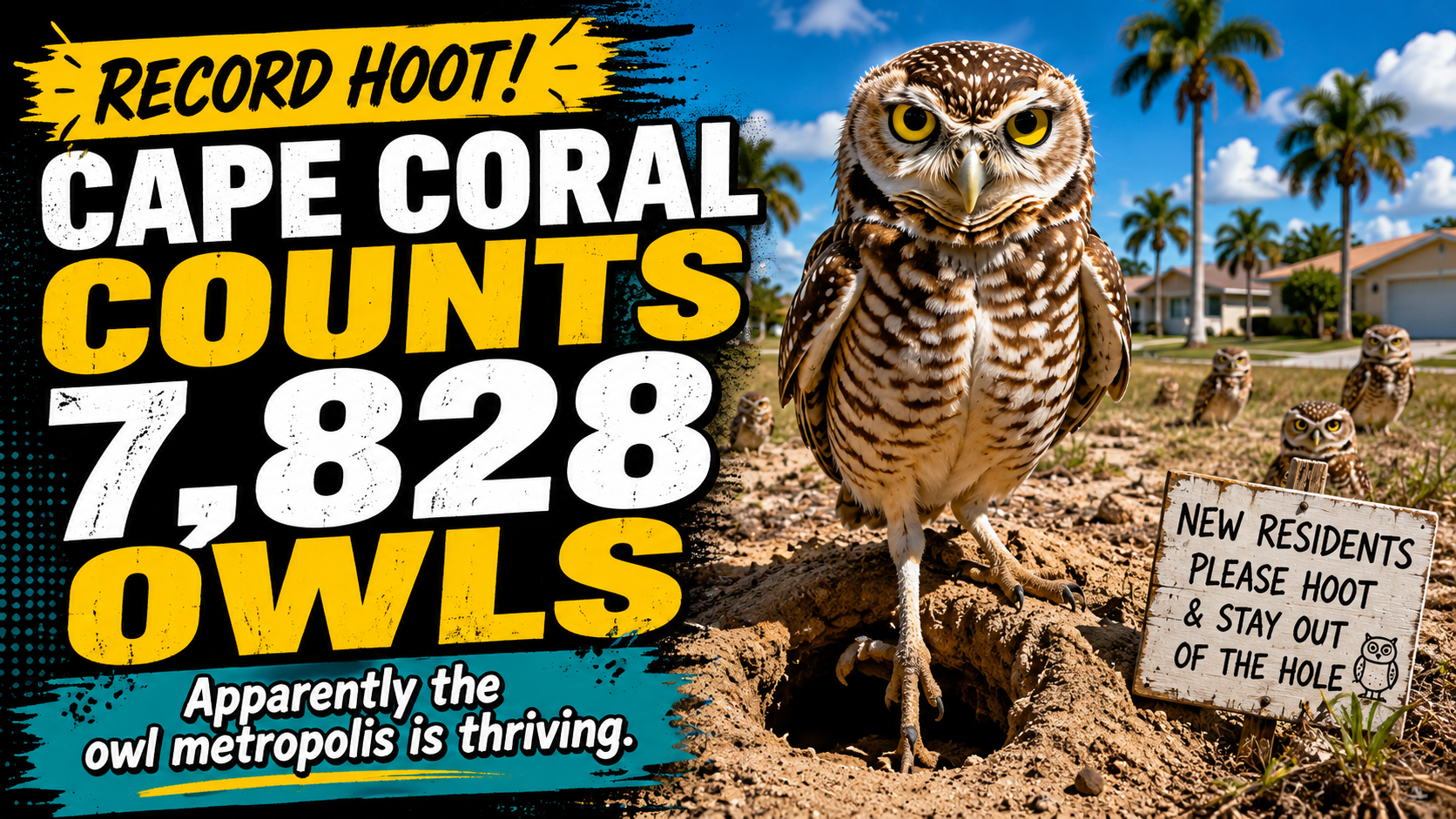
    According to the 2026 Cape Coral Burrowing Owl Census, volunteers counted a record 7,828 burrowing owls, up from 7,008 in 2025. The city is home to Florida’s largest known population of the threatened species. 

    That is a lot of owls.

    At this point, Cape Coral may need to stop referring to them as “wildlife” and start treating them as a voting bloc.

    Nearly 8,000 Owls

    Cape Coral Friends of Wildlife organized the census, which took place over the weekend of May 16. Around 140 volunteers helped with the count. 

    They documented:

    7,828 owls

    and

    6,792 burrows.

    Which means somewhere in Cape Coral there are probably several owls looking at each other like:

    “So… whose burrow are we meeting at tonight?”

    The count also included a large number of juvenile owls, which conservation officials said points to another successful breeding season. 

    Apparently the owl dating scene is thriving.

    Cape Coral: Population Growing, Owls Also Growing

    The impressive part is that the owl population is increasing even while Cape Coral continues to develop.

    Vacant lots are disappearing.

    Homes are going up.

    Roads are being expanded.

    Sidewalks are being built.

    And somehow the owls are still hanging in there.

    Cape Coral Friends of Wildlife says habitat loss remains one of the biggest threats to the species, along with vehicle strikes and secondary poisoning from rodenticides. 

    So while the record count is good news, conservationists are warning against assuming the problem is solved.

    Translation:

    Owls: “We’re doing pretty well.”

    Cape Coral development:

    “That’s a nice vacant lot you have there.”

    Owls:

    “Don’t even think about it.”

    These Birds Have Their Own Infrastructure

    Cape Coral Friends of Wildlife volunteers spend thousands of hours every year marking and monitoring burrows, clearing vegetation around them and educating residents. Some homeowners even install starter burrows in their yards to provide additional habitat. 

    Starter burrows.

    Cape Coral officially has housing assistance for owls.

    Meanwhile, somewhere, a human is still waiting on a building permit.

    The Official Bird Is Doing Pretty Well

    The burrowing owl is Cape Coral’s official city bird, and residents have become fiercely protective of them.

    You can see the little white PVC crosses marking burrows throughout the city.

    There are owl festivals.

    Owl merchandise.

    Owl tours.

    People photograph them.

    People report new burrows.

    People install starter burrows.

    Cape Coral didn’t just adopt a city bird.

    We built an entire fandom around it.

    And based on the latest count, the owls appear comfortable with the arrangement.

    Cape Crazy Translation

    Cape Coral Friends of Wildlife:

    “We counted 7,828 burrowing owls.”

    Everyone else:

    “You counted every one?”

    Volunteers:

    “Pretty much.”

    Cape Coral:

    “How many burrows?”

    Volunteers:

    “6,792.”

    Cape Coral:

    “So there are more owls than burrows?”

    Owls:

    “Rent is ridiculous everywhere.”

    The Serious Part

    This is actually really good news.

    Burrowing owls remain a threatened species in Florida, and habitat loss continues to be a major concern as Cape Coral develops. 

    The record population suggests that local conservation work is helping.

    Residents can help by avoiding rat poison, limiting pesticide use, reporting new burrows and installing starter burrows where appropriate. 

    So this may be one of the rare Cape Crazy stories where the crazy part is actually something worth celebrating.

    IS THIS CRAZY OR NOT?

    7,828 burrowing owls.

    6,792 burrows.

    And roughly 140 humans walking around Cape Coral counting them.

    Is this crazy?

    Or just one of the coolest things about living here?

    Tap an icon to vote.

  • Cape Coral School Zone Speed Cameras Are Now Active — And They’re Watching

    Cape Coral School Zone Speed Cameras Are Now Active — And They’re Watching

    Cape Coral drivers officially have one more reason to ease off the gas pedal near schools.

    The city’s new RedSpeed school-zone cameras are now active, and drivers who go more than 10 mph over the applicable speed limit during enforcement hours can receive a $100 civil violation in the mail. 

    So if you were one of those people who treated the flashing school-zone lights as a decorative suggestion…

    Congratulations.

    The sign now has backup.

    The Camera Doesn’t Need a Coffee Break

    Cape Coral Police says the cameras operate on school days only and are active:

    • 30 minutes before school starts
    • during school hours
    • 30 minutes after school ends

    When the school-zone lights are flashing, the reduced school-zone speed limit applies. When they are not flashing but school is still in session, the regular posted speed limit applies. In either case, drivers exceeding the applicable limit by more than 10 mph can receive a violation. 

    For example, the police department says driving 31 mph in a 20 mph zone is enough to trigger a citation. 

    Translation:

    20 mph sign: “Please drive 20.”

    Driver:

    “How about 31?”

    Camera:

    “How about $100?”

    Sixteen School Zones Are on the List

    Cape Coral Police says RedSpeed cameras have been permitted at 16 school zones, including Ida S. Baker High School, Challenger Middle School, Mariner Middle School, Cape Elementary, Gulf Elementary, Trafalgar Elementary and several others. 

    And these are not supposed to be mystery cameras hidden behind palm trees.

    The city says each enforced school zone includes signage warning drivers that photo enforcement is in use. 

    So the general sequence is:

    School sign.

    Flashing lights.

    Photo-enforcement warning.

    Speed-limit sign.

    Camera.

    And somehow there will still be someone saying:

    “How was I supposed to know?”

    Yes, It’s $100

    A violation carries a $100 civil penalty and is mailed to the registered owner of the vehicle. Cape Coral Police says the violation does not add points to the driver’s license and does not affect insurance. 

    Vehicle owners can also contest the violation before a local magistrate. 

    So this is not quite:

    “Straight to jail.”

    It is more:

    “Straight to the mailbox.”

    Someone Still Reviews the Ticket

    The system uses radar or laser technology to identify vehicles traveling above the threshold and records photo and video evidence. Cape Coral Police says a certified law-enforcement officer or traffic-infraction enforcement officer reviews the violation before a notice is issued. 

    That matters because the camera isn’t simply taking a picture and immediately launching a $100 invoice into cyberspace.

    There is supposed to be a human review before the citation goes out. 

    Which means somewhere in Cape Coral, a person may now spend part of the day watching motorists fly through school zones and thinking:

    “Really?”

    “Really?”

    “Seriously?”

    “Another one?”

    Where Does the Money Go?

    Cape Coral Police says revenue collected from the violations goes to the City of Cape Coral and is restricted to public-safety uses under Florida law. 

    The city says the purpose of the program is safety: consistent enforcement without having to station police officers in every school zone every day. 

    And that is the serious argument in favor of the cameras.

    Kids are walking, biking, getting dropped off and crossing streets around these schools.

    If drivers are blasting through those areas at 10, 15 or 20 mph above the limit, somebody eventually gets hurt.

    A camera doesn’t get distracted.

    It doesn’t have to answer another call.

    And it doesn’t decide:

    “Eh, I’ll let that one go.”

    But You Know What Comes Next

    There will almost certainly be a debate over whether this is really about safety or whether it becomes a revenue generator.

    That debate follows nearly every automated traffic-enforcement program.

    Supporters will say:

    “Just don’t speed and you’ll never pay a dime.”

    Opponents will say:

    “This is automated ticketing.”

    Both sides will have plenty to argue about.

    But there is one very easy way to make absolutely certain Cape Coral never makes $100 from you through one of these cameras:

    Drive the speed limit.

    It’s annoyingly simple.

    Cape Crazy Translation

    City:

    “Please slow down around schools.”

    Drivers:

    “Okay.”

    City:

    “Seriously.”

    Drivers:

    “Sure.”

    City:

    “We installed cameras.”

    Drivers:

    “Wait, what?”

    Camera:

    📸

    Mailbox three weeks later:

    “Hello.”

    IS THIS CRAZY OR NOT?

    Cape Coral now has automated speed enforcement in school zones, with a $100 penalty for going more than 10 mph over the applicable limit.

    Is it a smart way to protect kids?

    Or have we entered the era where even the school-zone sign has a billing department?

    Tap an icon to vote.

  • Excavator Hits Gas Line in Cape Coral, Prompting Evacuations Near SE 47th Terrace

    Excavator Hits Gas Line in Cape Coral, Prompting Evacuations Near SE 47th Terrace

    Nothing livens up a Monday morning quite like:

    “Everybody out, and whatever you do, don’t light anything.”

    Cape Coral emergency crews responded to a natural gas leak in the 1300 block of Southeast 47th Street after an excavator struck a gas line behind Merrick Seafood on Southeast 47th Terrace. The leak prompted precautionary evacuations of nearby buildings while firefighters and utility crews worked to stop it. 

    Fortunately, no injuries were reported. 

    Which is the best possible ending to a story that starts with heavy equipment meeting an underground gas line.

    One Dig. Several Evacuations.

    Cape Coral Police asked people in buildings along the south side of the 1200–1300 block of SE 47th Street and the north side of the 1200–1300 block of SE 47th Terrace to evacuate as a precaution. 

    People still in the area were told not to use heat or open flames.

    Because when there is natural gas leaking nearby, this is apparently not the moment to say:

    “Anybody want me to fire up the grill?”

    The Cape Coral Fire Department’s hazardous materials team responded along with TECO Peoples Gas crews to contain the leak. 

    The Excavator Has Entered the Chat

    According to the fire department, the whole situation began when an excavator struck the natural gas line behind Merrick Seafood. 

    There are certain sounds an excavator operator probably hopes never to hear.

    Metal scraping metal.

    Glass breaking.

    A supervisor yelling your full name.

    And presumably:

    “Is that gas?”

    At that point, whatever job you were doing has officially been replaced by a much larger job involving firefighters, police officers, utility crews and several evacuated businesses.

    Downtown Cape Coral Gets an Unexpected Break

    The leak affected an area near Southeast 47th Terrace, a busy restaurant and business district in south Cape Coral.

    Instead of lunch specials and normal Monday traffic, the neighborhood got emergency vehicles and an evacuation perimeter.

    Cape Crazy translation:

    Excavator operator:

    “Just doing a little digging.”

    Gas line:

    “Absolutely not.”

    Fire Department:

    “Everybody out.”

    Police:

    “No open flames.”

    Nearby restaurant:

    “Well, this is inconvenient.”

    The Good News: It Was Over Fairly Quickly

    By 11:45 a.m., authorities reported that the leak had been stopped and the area cleared. The evacuation request was rescinded once the hazard was mitigated. 

    So this one ended without injuries, without a fire and without Cape Coral accidentally becoming the world’s largest outdoor flambé demonstration.

    That is a win.

    The Serious Part

    Damaging an underground natural gas line can obviously become dangerous very quickly.

    Natural gas can ignite if it reaches an ignition source, which is why emergency officials ordered evacuations and warned people against using heat or open flames while crews worked.

    The response also shows why underground utility locations matter anytime excavation work is taking place.

    In this case, emergency crews were able to secure the leak and clear the area without anyone getting hurt. 

    Still, shutting down part of downtown because an excavator found the wrong pipe?

    That qualifies for the site.

    IS THIS CRAZY OR NOT?

    An excavator hits a natural gas line behind a Cape Coral seafood restaurant, two blocks get evacuated, and everybody is warned not to light anything.

    Just another Monday in Cape Coral?

    Tap an icon to vote.

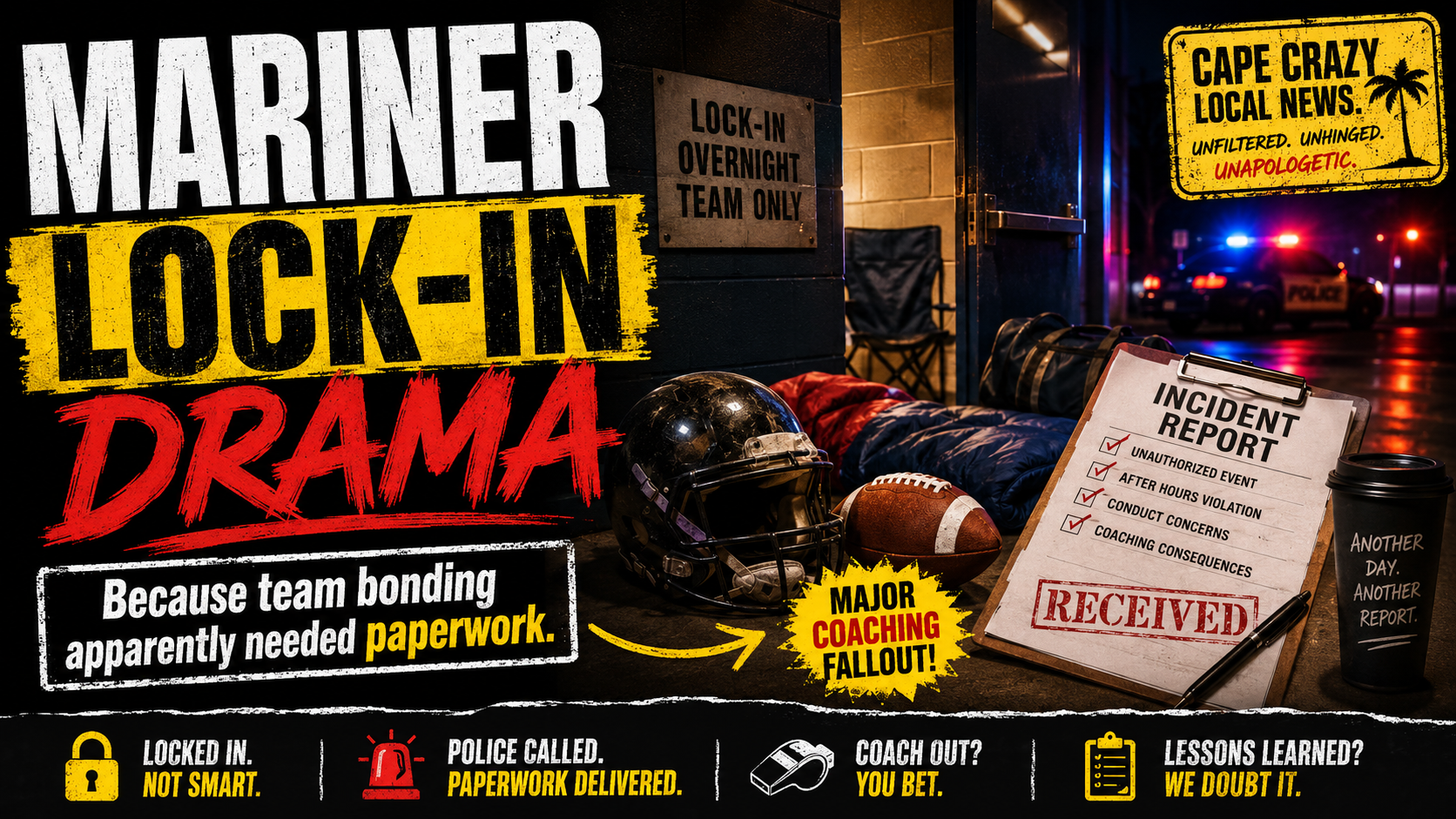
  • Mariner High Football “Lock-In” Leads to Police Report and Coaching Shake-Up

    Mariner High Football “Lock-In” Leads to Police Report and Coaching Shake-Up

    There are team-building activities.

    There are overnight lock-ins.

    And then there are overnight lock-ins that end with:

    police reports, upset participants and six coaches no longer with the program.

    That is generally not how the brochure describes it.

    A newly obtained Cape Coral Police Department report is shedding more light on what happened during an overnight lock-in involving the Mariner High School football program in Cape Coral. Gulf Coast News reports that police described the incident as horseplay that left multiple people upset. 

    The Lee County School District had already taken significant action afterward. Earlier reporting said six Mariner football coaches were no longer with the program, with four reportedly fired and two placed on administrative leave. Assistant coach and teacher Doug Faasse, who was not at the lock-in, was named interim head coach. 

    So whatever happened that night, it apparently did not stay in the locker room.

    “Team Bonding” Apparently Went Off Script

    The whole point of a football lock-in is supposed to be pretty straightforward.

    Players spend time together.

    Maybe watch film.

    Maybe eat pizza.

    Maybe play games.

    Build chemistry.

    Become a tighter team.

    At no point is the intended itinerary usually:

    11:00 p.m. — Team bonding

    12:30 a.m. — Horseplay

    1:15 a.m. — People upset

    Later — Police report

    Following week — Organizational restructuring

    That is less of a lock-in and more of a management case study.

    Police Apparently Did Not Describe It as Some Organized Crime Ring

    The newly reported police account is important because it appears to put some context around the incident.

    Gulf Coast News says the Cape Coral police report characterized what occurred as horseplay, rather than describing some elaborate criminal operation. 

    That does not mean whatever happened was appropriate.

    “Horseplay” is one of those words adults use when something starts with:

    “We were just messing around.”

    and ends with:

    “Why is the principal calling my parents?”

    The real question is how far that behavior went, who participated, who supervised it and whether adults responsible for the students responded appropriately.

    Those details matter far more than whatever nickname gets attached to the incident.

    Six Coaches Gone Is Not a Minor Personnel Adjustment

    The school district’s response is what makes this story especially notable.

    When six members of a football coaching staff are suddenly not with the program after one overnight event, that is not:

    “We made a few scheduling changes.”

    That is:

    “Something went very wrong.”

    Earlier coverage reported that four coaches were fired and two others placed on administrative leave as the district investigated the incident. 

    Faasse, who reportedly was not present at the lock-in, was then named interim head coach. 

    Which may be the most reassuring qualification imaginable in this particular situation:

    “Our new guy wasn’t there.”

    Cape Crazy Translation

    Coach:

    “We’re going to have an overnight lock-in to build team unity.”

    Parent:

    “Sounds good.”

    Several hours later:

    “There was horseplay.”

    Parent:

    “Okay…”

    Police:

    “We wrote a report.”

    School district:

    “Six coaches are no longer with the program.”

    Parent:

    “What exactly did they do at this lock-in?”

    Everyone:

    “Excellent question.”

    The Serious Part

    These are high-school students, and that changes the tone considerably.

    Players are supposed to be under adult supervision during school-sponsored athletic activities. Coaches and school employees have a responsibility to maintain a safe environment, even when teenagers are being teenagers.

    The police report apparently offers additional context, but the personnel actions taken by the district show that school officials treated the incident seriously. 

    It’s also worth avoiding conclusions the available reporting does not support. A staffing decision is not the same as a criminal conviction, and the police description of “horseplay” does not necessarily tell us everything that occurred.

    What it does tell us is that one football lock-in created enough fallout to involve police, parents, school administrators and a substantial portion of the coaching staff.

    That is quite an accomplishment for one night.

    IS THIS CRAZY OR NOT?

    An overnight high-school football lock-in ends with a police report and six coaches no longer with the program.

    Is that team bonding gone wildly off course?

    Tap an icon to vote.

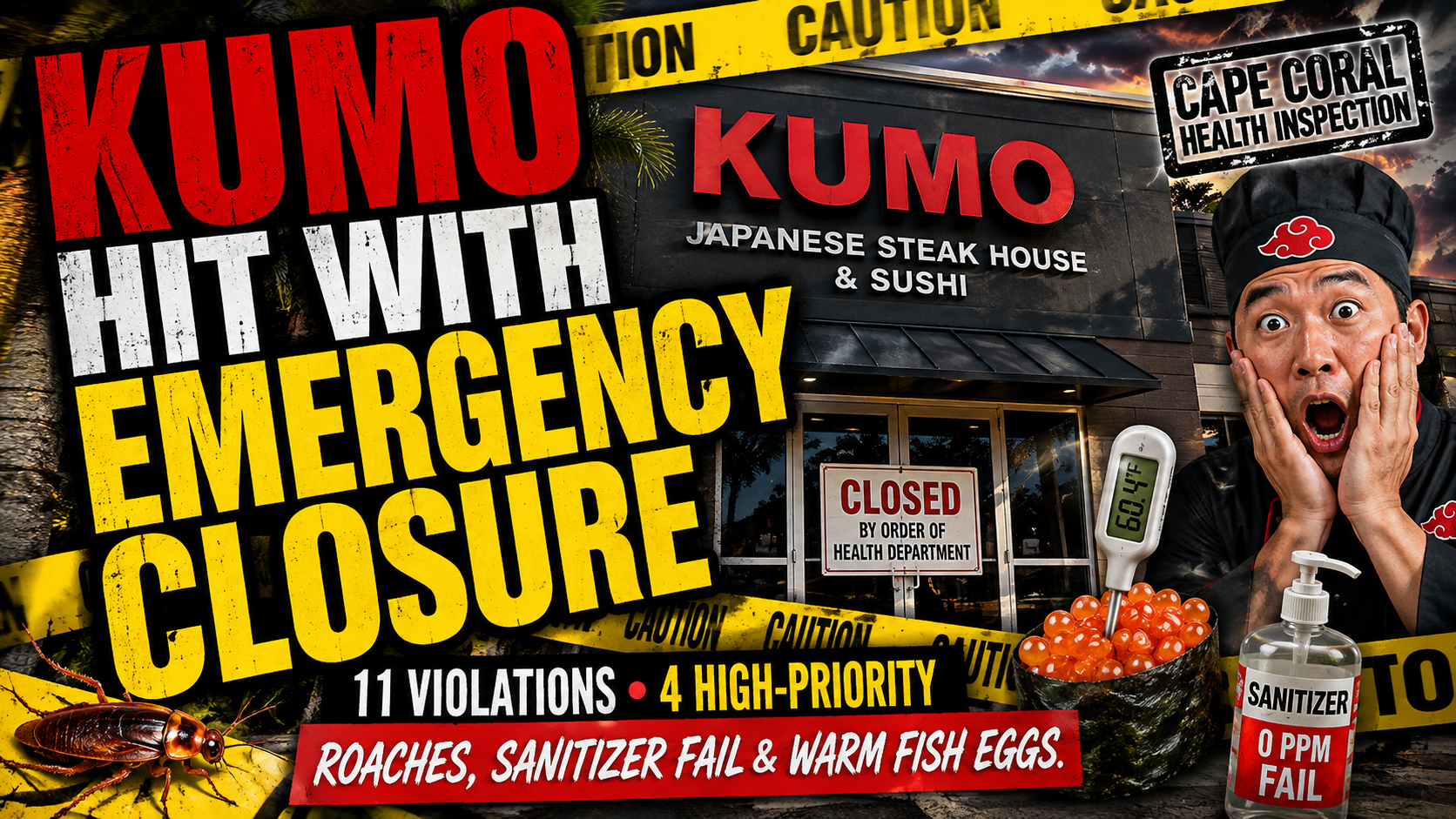
  • Cape Coral Sushi Restaurant Temporarily Closed After Roaches, Warm Fish Eggs and a Sanitizer Problem

    Cape Coral Sushi Restaurant Temporarily Closed After Roaches, Warm Fish Eggs and a Sanitizer Problem

    There are restaurant inspections.

    And then there are restaurant inspections that make you look at the leftover sushi in your refrigerator a little differently.

    Kumo Japanese Steak House in Cape Coral was temporarily closed after a state inspection found 11 violations, including four high-priority violations. The restaurant is located at 2517 Santa Barbara Blvd. 

    The inspection took place on August 11, and the state recommended an emergency order. The restaurant later passed its callback inspection and was listed as reopened on August 12. 

    So before anybody starts canceling dinner reservations for the rest of eternity: yes, the place did reopen.

    But the inspection itself?

    Well.

    There was a lot going on.

    First Up: The Dishwasher That Wasn’t Really Dishwashing

    According to the inspection information shown in the Florida Food Watch post, the dishwasher’s chlorine sanitizer tested at 0 parts per million after multiple attempts.

    That meant it could not be used for sanitizing until it was repaired.

    Which is somewhat unfortunate, because the machine’s name contains the word dishwasher and most diners are generally hoping the “washer” portion is more than ceremonial.

    Cape Crazy translation:

    Dishwasher: “I washed it.”

    Inspector:

    “Did you sanitize it?”

    Dishwasher:

    “That feels like a very personal question.”

    The Lobster Apparently Wanted the Top Shelf

    Inspectors also reported that raw lobster tail was being stored directly above a case of lemons in the walk-in cooler.

    The operator moved the items to proper storage during the inspection.

    This was reportedly a repeat violation.

    Now, I’m no professional food-storage consultant, but “raw seafood dripping downward toward the garnish” does not sound like the premium hibachi experience most customers had in mind.

    Somewhere, a lemon was probably thinking:

    “I did not sign up for this.”

    Then the Roaches Entered the Chat

    This is probably the part most people are going to remember.

    The inspection report shown in the post said inspectors observed live roach activity, including:

    • one live roach on the wait-station floor
    • seven live roaches on the dishwasher

    The operator began cleaning and sanitizing the area.

    Seven.

    On the dishwasher.

    The dishwasher that already had the sanitizer problem.

    At that point the equipment wasn’t just having a bad day.

    It was hosting guests.

    The Fish Eggs Were Feeling Tropical

    Inspectors also found fish eggs at the sushi counter being cold-held above 41°F, with a measured temperature of 60°F.

    The operator moved them into a cooler. According to the inspection post, 41°F is the cold-holding threshold being referenced.

    Sushi ingredients generally benefit from being kept cold.

    This is not really an area where you want the food saying:

    “Actually, room temperature feels nice.”

    Eleven Violations Total

    The inspection reported 11 total violations, with four classified as high priority.

    Florida DBPR describes high-priority violations as conditions that can contribute directly to foodborne illness or injury, which is why an emergency closure recommendation is taken seriously. Florida’s public inspection system makes closure and historical inspection records available for public review. 

    The important follow-up is that this was not a permanent closure.

    The restaurant was listed as having completed its emergency-order callback and reopened the next day. 

    So whatever corrections were required for reopening were apparently made.

    Cape Crazy Translation

    Inspector:

    “The dishwasher sanitizer isn’t working.”

    Restaurant:

    “We’ll fix it.”

    Inspector:

    “Raw lobster is over the lemons.”

    Restaurant:

    “We’ll move it.”

    Inspector:

    “The fish eggs are 60 degrees.”

    Restaurant:

    “We’ll chill them.”

    Inspector:

    “Also, there are eight live roaches.”

    Restaurant:

    “…”

    Inspector:

    “We’re going to need you to close for a minute.”

    That seems fair.

    The Serious Part

    Restaurant inspections exist for a reason.

    Foodborne illness can be extremely serious, and high-priority violations involving temperature control, cross-contamination and sanitation aren’t just cosmetic issues.

    The restaurant deserves credit for correcting the issues sufficiently to reopen after the callback inspection, but customers also deserve to know what inspectors found.

    Public inspection reports let people make that decision for themselves.

    And in this case, the phrase “seven live roaches on the dishwasher” may require a few minutes of emotional processing.

    IS THIS CRAZY OR NOT?

    A failed sanitizer test.

    Raw lobster over lemons.

    Fish eggs at 60°F.

    And eight live roaches.

    Cape Coral, we hand this one over to you.

    Tap an icon to vote.

  • Cape Coral Wants 25 MPH Neighborhood Speed Limits — Because Apparently the Signs Will Fix It

    Cape Coral Wants 25 MPH Neighborhood Speed Limits — Because Apparently the Signs Will Fix It

    Cape Coral City Council has given unanimous consensus support to lowering speed limits on neighborhood roads to 25 mph, with the stated goal of reducing the risk of serious injuries and deaths in crashes. 

    The plan still has to come back to City Council for formal approval, because a consensus vote gives staff direction but does not actually change the law. 

    So for now, nobody needs to slam on the brakes.

    Yet.

    The Current Problem: People Apparently Drive Too Fast

    City officials say speed matters because the consequences of a crash become dramatically worse as vehicle speed increases. City Manager Michael Ilczyszyn framed the proposal as a risk-management decision, telling council that crashes at higher speeds are significantly more likely to be deadly. 

    That part is difficult to argue with.

    Physics remains stubbornly opposed to being hit by a car.

    Cape Coral also has an extra complication: many residential areas were laid out long ago without sidewalks or substantial pedestrian infrastructure, which makes people walking or biking especially vulnerable. 

    So the basic goal makes sense:

    Cars slower. People safer.

    Pretty straightforward.

    Then we get to the Cape Crazy portion.

    Step One: Replace 807 Signs

    Council selected the option that would replace 807 speed-limit signs citywide, at an estimated cost of $57,719. Two cheaper alternatives involving gateway signs were also presented, but council favored replacing the signs throughout the city. 

    Eight hundred and seven signs.

    That is a lot of signs.

    Which means somewhere in Cape Coral, a sign company may have just heard a cash register noise.

    The city’s new message would essentially be:

    OLD SIGN: 30 MPH
    NEW SIGN: 25 MPH

    Drivers:

    “Ah. This changes everything.”

    There Is One Slight Issue

    The city’s own study found the citywide 85th-percentile speed was 28.7 mph on the roads sampled. The upper end of the common 10-mph pace was 27.9 mph. 

    Translation:

    A lot of drivers are already traveling above 25 mph.

    So if somebody currently sees:

    30 MPH

    and drives 35…

    we are apparently hoping that replacing it with:

    25 MPH

    will inspire:

    “Well, now I’d better behave.”

    Maybe.

    Optimism is important.

    Even the City Says Signs Alone Aren’t the Magic Answer

    Principal Planner Laura Dodd told council that enforcement and driver education are the most effective ways to change speeding behavior. 

    Which makes sense.

    A speed-limit sign has several impressive features:

    • reflective surface
    • large numbers
    • weather resistance
    • ability to stand completely still for decades

    What it does not possess is the ability to chase a Dodge Charger doing 47 through a residential neighborhood.

    Cape Coral Police now supports the proposal, which is noteworthy because a similar effort in 2016 reportedly failed partly because police had concerns about enforcement. 

    Apparently we’ve reached the sequel.

    Cape Coral Speed Limits II: This Time We Mean It.

    Residents Have Definitely Noticed the Speeding

    The city collected public feedback through a workshop and online poll earlier this year.

    Consultants received 466 comments. The most common complaint involved speeding on major roads, with 167 comments, followed by 94 comments about speeding on local streets. 

    So this isn’t a problem City Hall invented for entertainment.

    People are complaining about speeding.

    And between 2020 and 2024, Cape Coral recorded 506 crashes on local roads. 

    That gives the proposal a legitimate safety rationale.

    But it also raises the question:

    If the problem is that drivers ignore speed limits…

    how much does lowering the number on the sign actually accomplish without enforcement?

    Cape Crazy Translation

    City:

    “People are speeding.”

    Residents:

    “Correct.”

    City:

    “We should reduce neighborhood speeds.”

    Residents:

    “Okay.”

    City:

    “We’re replacing 807 signs.”

    Drivers who currently ignore the signs:

    “Oh no.”

    City:

    “Now they’ll say 25.”

    Drivers:

    “Anyway…”

    The $57,719 Question

    Spending about $58,000 isn’t enormous by city-government standards.

    If reducing neighborhood speeds prevents even one serious crash, proponents could reasonably argue that the expense was worth it.

    But signs alone don’t change behavior.

    If Cape Coral follows this with targeted enforcement, education and traffic-calming measures where speeding is worst, then the policy may actually have teeth.

    If the entire strategy is:

    Put up 807 new signs and wait for human nature to improve…

    Well.

    We may want to keep the receipt.

    IS THIS CRAZY OR NOT?

    Should Cape Coral spend nearly $58,000 replacing 807 signs to lower neighborhood speed limits to 25 mph?

    Or is the real issue enforcement, not the number printed on the sign?

    Tap an icon to vote.


    Source: The Cape Coral Breeze reported that City Council gave unanimous consensus support to reducing neighborhood road speed limits to 25 mph and selected a citywide sign-replacement option estimated at $57,719. 

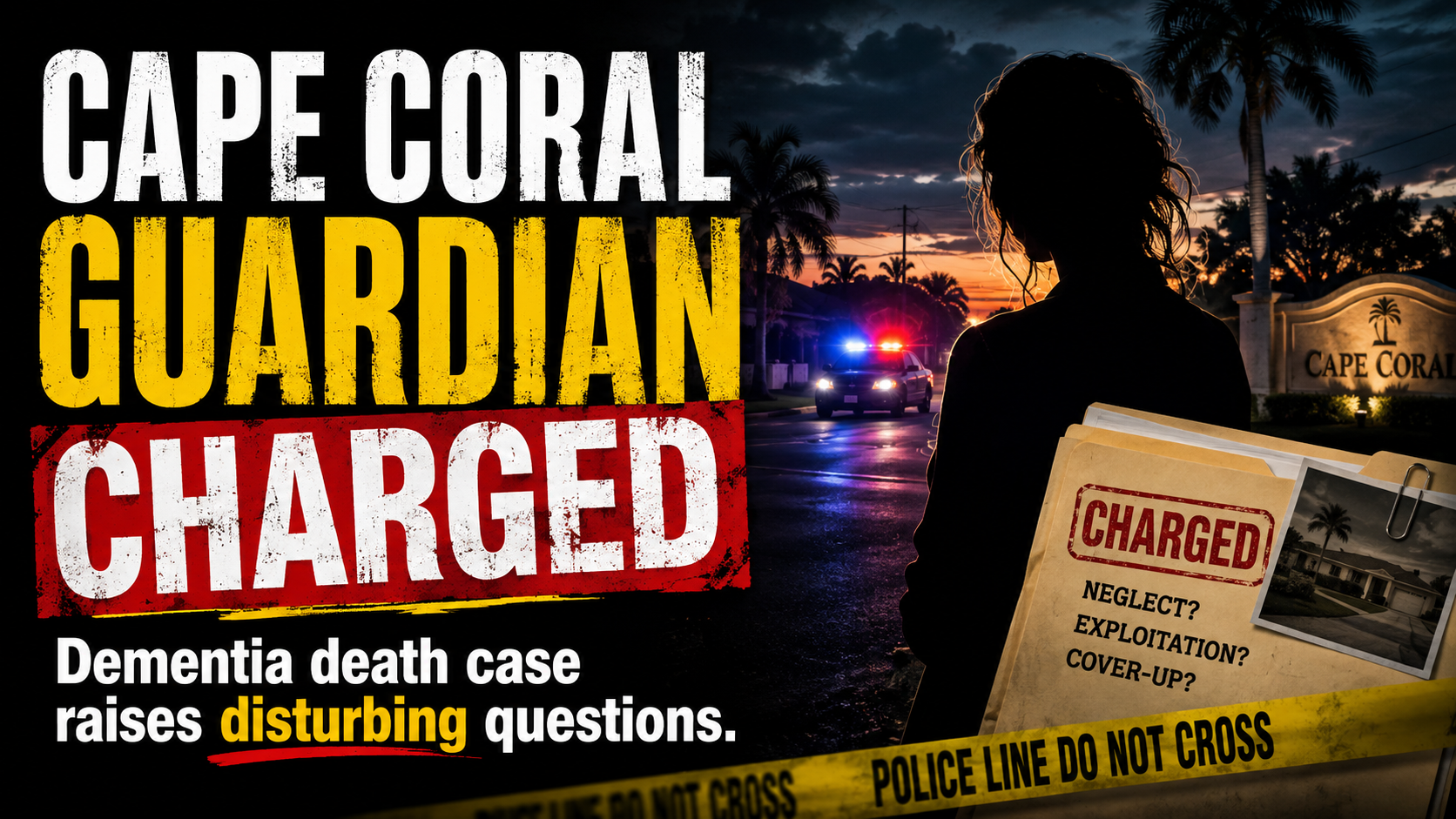
  • Cape Coral Guardian Charged After Dementia Patient Found Dead Near Road

    Cape Coral Guardian Charged After Dementia Patient Found Dead Near Road

    There are some stories where the facts are so strange that sarcasm almost writes itself.

    This is one of them.

    Cape Coral police say 60-year-old Lori Hamilton, who was the court-appointed guardian of 59-year-old Brenda Corbin, has been charged with disturbing a dead body after investigators concluded Hamilton intended to conceal Corbin’s death and alter the circumstances surrounding it. Hamilton has not been convicted, and the allegations remain just that — allegations. 

    Corbin had dementia and was living with Hamilton at the time. Hamilton reported her missing on May 20, 2025, telling police she had last seen Corbin the night before. 

    Three days later, Corbin’s body was found in bushes near Bermont Road and Chiquita Drive in Cape Coral. 

    And that is where this story goes from troubling to deeply bizarre.

    The “Missing Person” Story Had Some Problems

    According to the arrest affidavit summarized by ABC7, Hamilton told police she drove around looking for Corbin before reporting her missing. She said Corbin did not have a phone and did not have a car. 

    Police searched the area.

    A bloodhound picked up Corbin’s scent briefly, then lost it.

    Then investigators searched Hamilton’s truck.

    Inside, they found Corbin’s wallet and belongings. K-9 units also detected the odor of human remains at or near the rear tailgate of the truck, according to the affidavit. 

    So at that point, the situation had apparently moved well beyond:

    “Maybe she wandered away.”

    And into:

    “We should probably talk about the truck.”

    Technology Was Apparently Taking Notes

    Investigators also examined Hamilton’s phone and license-plate-reader records.

    According to the affidavit, those records placed Hamilton’s truck near the location where Corbin’s body was later discovered. Police said historical records did not show the vehicle in that area during comparable late-night hours in 2024 or 2025. 

    Which is another reminder that modern life contains approximately 47 different ways for your movements to be recorded.

    Phone location.

    License-plate readers.

    Traffic cameras.

    Business cameras.

    Doorbell cameras.

    Dashcams.

    Apparently, if your plan depends on nobody being able to reconstruct where your vehicle went, 2026 is not an especially accommodating year.

    Corbin Was Found Near the Road

    On May 23, police found Corbin’s nude, decomposing body in bushes near Bermont Road and Chiquita Drive. Investigators reported marks in the grass indicating the body had been dragged from the edge of the road, and a leather belt was found between the roadway and the body. 

    The medical examiner was unable to determine Corbin’s cause of death. 

    That point matters.

    Hamilton is not charged with causing Corbin’s death in the report we’re relying on. The charge is disturbing a dead body, and investigators allege she tried to conceal the death and change the circumstances surrounding it. 

    That distinction should be kept very clear.

    There Was More Trouble Before Corbin Went Missing

    Corbin and Hamilton had reportedly been friends since high school. Corbin had previously lived in assisted-living facilities and had a history of trying to leave them, including escaping one facility and attempting to climb a fence at another. 

    Hamilton later checked Corbin out of a Tampa facility.

    Investigators said staff there told them Hamilton would not allow doctors to adjust Corbin’s medication, which they said contributed to behavioral issues. Hamilton removed Corbin from that facility on May 2. 

    Corbin’s children told detectives they last spoke with their mother on May 16. According to the affidavit, Corbin told them Hamilton would not tell her where she was. Hamilton then got on the phone, apologized and ended the call. 

    That is the part of the story where the humor stops pretty quickly.

    Cape Crazy Translation

    Again, these are allegations, not findings of guilt.

    But according to investigators, the sequence goes something like this:

    Guardian:

    “My friend is missing.”

    Police:

    “We’ll investigate.”

    Search of truck:

    “Her belongings are here.”

    K-9:

    “Something happened near the tailgate.”

    Phone data:

    “The truck was near where the body was found.”

    License-plate data:

    “Yep.”

    Investigators:

    “We need to talk.”

    At some point, the universe appears to be submitting exhibits.

    The Part That Isn’t Funny

    Corbin was a vulnerable adult with dementia who was dependent on other people for her safety and care.

    Whatever ultimately happened in this case, she deserved dignity and protection.

    That is why this story is so disturbing.

    The “crazy” part is not Corbin.

    It is the alleged conduct surrounding what happened after her death and the increasingly difficult-to-explain trail investigators say they uncovered.

    Hamilton remained in the Charlotte County Jail on a $6,000 bond as of ABC7’s August 10 report. 

    IS THIS CRAZY OR NOT?

    Police allege a court-appointed guardian reported a dementia patient missing, while investigators later found the woman’s belongings in the guardian’s truck and data placing that vehicle near where the body was discovered.

    Tap an icon to vote.


    Source

    ABC7/WWSB reported the case on August 10, 2026, based on Cape Coral Police arrest records and the arrest affidavit. 

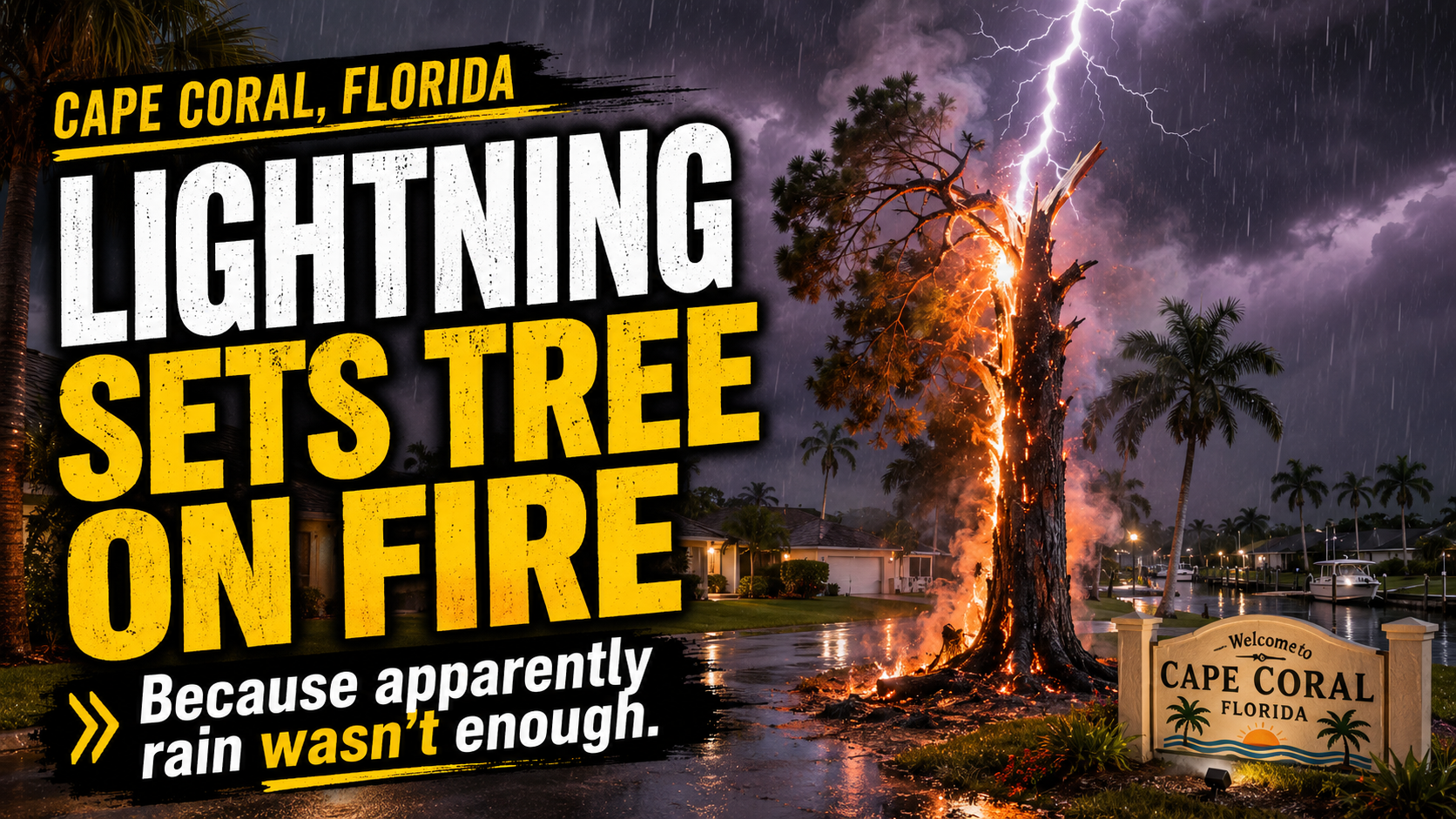
  • Lightning Strike Sets Cape Coral Trees on Fire — Because Apparently Rain Wasn’t Enough

    Lightning Strike Sets Cape Coral Trees on Fire — Because Apparently Rain Wasn’t Enough

    Cape Coral got another reminder this week that Florida thunderstorms are not interested in subtlety.

    During Sunday’s storm, lightning struck trees along Southwest Second Terrace, setting them on fire and sending smoke into the neighborhood. The Cape Coral Fire Department later confirmed lightning as the cause. No injuries or damaged homes were reported in the coverage. 

    Yes, it was raining.

    Yes, the trees still caught fire.

    Because Florida.

    The Weather Apparently Had a Checklist

    A normal thunderstorm might bring:

    Rain.

    Wind.

    Thunder.

    Maybe some street flooding.

    Cape Coral weather apparently reviewed that list and decided it lacked ambition.

    “What if we also set the landscaping on fire?”

    Witness video showed a smoky scene along Southwest Second Terrace after the lightning strike ignited the trees. Firefighters responded, and Gulf Coast News reported that the fire department confirmed the strike as the cause. 

    Fortunately, there were no reported injuries and no homes were reported damaged. 

    So this one ended up being more spectacular than disastrous.

    Which is generally the preferred category of crazy.

    Wait — Aren’t Trees Wet During a Thunderstorm?

    You would think so.

    Unfortunately, lightning operates on a somewhat different level than your backyard garden hose.

    A lightning strike can generate extraordinary heat almost instantaneously. When that energy travels through a tree, moisture inside the wood can rapidly turn to steam, bark can explode outward, and dry or combustible material can ignite.

    Translation:

    Rain: “I got this.”

    Lightning: “No, you absolutely do not.”

    And Southwest Florida certainly wasn’t lacking electrical activity. Recent Cape Coral storms have produced intense bursts of lightning; Gulf Coast News reported one recent 15-minute period with 108 lightning strikes over the city. 

    At that point, the sky isn’t really flashing anymore.

    It’s just aggressively flickering.

    Another Normal Day in Florida

    This is one of those stories that probably sounds much stranger if you don’t live here.

    Someone in another state:

    “Lightning set the trees on fire while it was raining?”

    Cape Coral resident:

    “Yeah.”

    “Is that unusual?”

    “Depends what month it is.”

    Florida weather has an impressive ability to produce conditions that seem mutually exclusive.

    Sunshine while raining.

    Flooding during drought season.

    Ninety degrees before breakfast.

    And now:

    Trees burning during a thunderstorm.

    It is difficult to surprise us anymore.

    The Serious Part

    Lightning is obviously no joke.

    If thunder is close enough to hear, lightning is close enough to strike. Trees, open yards, canals and outdoor structures aren’t safe places to wait out a storm.

    In this case, the most important part of the story is that nobody was reported hurt and no house was reported damaged. 

    The trees?

    They apparently drew the short straw.

    Cape Crazy Translation

    Mother Nature:

    “Cape Coral needs rain.”

    Also Mother Nature:

    “Let’s set something on fire.”

    Cape Coral:

    “Those seem like conflicting objectives.”

    Mother Nature:

    “I’m comfortable with my decision.”

    Fire Department:

    “Here we go again.”

    IS THIS CRAZY OR NOT?

    Lightning striking a tree isn’t unusual in Florida.

    But lighting trees on fire in the middle of a rainstorm?

    That deserves a Cape Crazy vote.

    Tap an icon to vote.


    Source: Gulf Coast News reported that a lightning strike during Sunday’s storm ignited trees along Southwest Second Terrace in Cape Coral. The Cape Coral Fire Department confirmed lightning as the cause. 

  • Cape Coral Therapist Says City Compliance Costs Could Put Her Out of Business

    Cape Coral Therapist Says City Compliance Costs Could Put Her Out of Business

    Owning a small business is already expensive enough.

    Rent.

    Insurance.

    Payroll.

    Equipment.

    Utilities.

    Taxes.

    And apparently, in Cape Coral, there may also be a bonus round where somebody looks at your parking lot and dumpster and says:

    “That’ll be another $80,000.”

    Barbara Pyatt, owner of Hand Therapy of Cape Coral, says city-required upgrades to her property could cost nearly $80,000 — enough, she says, to threaten the future of her small occupational-therapy business. 

    Which is certainly one way to encourage local healthcare services.

    The Business Is Supposed to Treat Hands, Not Print Money

    Pyatt runs an occupational-therapy practice in Cape Coral.

    According to Gulf Coast News, the issue involves city-required improvements involving her parking lot and dumpster area. The total price tag could approach $80,000. 

    For a giant corporation, $80,000 might be buried somewhere between “conference-room chairs” and “executive coffee budget.”

    For a small independently owned therapy practice?

    That can be the difference between:

    “We’ll make the improvements.”

    and

    “We’ll make the moving announcement.”

    Somewhere, a Dumpster Has Become a Capital Improvement Project

    To be clear, cities need building standards.

    Parking lots need to be safe.

    Commercial properties should comply with reasonable rules.

    Dumpsters should probably not be rolling freely down Del Prado Boulevard.

    Nobody is arguing for complete municipal anarchy.

    But whenever compliance costs start approaching $80,000 for a small healthcare business, it seems fair to ask whether the rules are achieving their intended purpose — or simply creating a financial obstacle that the business can’t realistically overcome. 

    Because the ultimate goal of code compliance presumably isn’t:

    Step 1: Improve parking lot.
    Step 2: Improve dumpster enclosure.
    Step 3: Business closes.
    Step 4: Admire beautifully compliant empty building.

    “Your Property Is Now Perfect. Unfortunately, Nobody Works Here.”

    This is where government regulations sometimes enter their own strange universe.

    Each individual requirement may make sense on paper.

    Upgrade this.

    Modify that.

    Bring this section into compliance.

    Fix another section.

    Then somebody totals everything up.

    $80,000.

    And suddenly the conversation changes from property improvement to whether the business can survive the property improvement.

    There is a point where the cure becomes slightly more concerning than the condition.

    If a locally owned occupational-therapy practice is providing a needed service and has been operating without creating some obvious public danger, perhaps there is room for phased improvements, reasonable exemptions, financial assistance or some other solution that doesn’t involve dropping an $80,000 compliance piano on the owner’s head.

    Small Business, Meet Big Checklist

    Cape Coral talks frequently about growth.

    New residents.

    New businesses.

    Economic development.

    More commercial investment.

    All good things.

    But attracting businesses is only half the equation.

    You also have to make it possible for existing businesses to remain businesses.

    There is something slightly awkward about saying:

    “Cape Coral is open for business!”

    followed immediately by:

    “Before you continue operating, we’d like to discuss your dumpster.”

    The Serious Part

    This isn’t just about one business owner being annoyed by regulations.

    Occupational therapists provide rehabilitation and functional care to people recovering from injuries, surgeries and other conditions.

    If a small practice closes because compliance costs become financially impossible, the consequences extend beyond the owner.

    Employees can lose jobs.

    Patients can lose a local provider.

    And Cape Coral loses another small business.

    The city may have legitimate legal or safety reasons for requiring the improvements. Without seeing every code requirement and the property’s history, it wouldn’t be fair to simply declare the city wrong.

    But when the reported cost reaches nearly $80,000, asking whether there is a more reasonable path forward seems entirely appropriate. 

    Cape Crazy Translation

    Business owner:

    “I help people recover and get back to using their hands.”

    City:

    “Excellent. We’d like to discuss your dumpster.”

    Business owner:

    “Okay…”

    City:

    “And the parking lot.”

    Business owner:

    “How much?”

    City:

    “Potentially around $80,000.”

    Business owner:

    “I may have to close.”

    Cape Coral:

    “But imagine how nice that dumpster area will look.”

    IS THIS CRAZY OR NOT?

    Should a small Cape Coral healthcare business potentially face nearly $80,000 in required property upgrades just to remain compliant?

    Tap an icon to vote.


    Source: Gulf Coast News reports that Barbara Pyatt, owner of Hand Therapy of Cape Coral, says required parking-lot and dumpster upgrades could cost nearly $80,000 and jeopardize her business.

  • Cape Coral Flock Cameras Cut Down — Because Apparently the Cameras Needed Protection Too

    Cape Coral Flock Cameras Cut Down — Because Apparently the Cameras Needed Protection Too

    Cape Coral police are investigating after four Flock license-plate reader cameras were damaged at the intersection of Diplomat Parkway East and Santa Barbara Boulevard. The cameras were reportedly cut down, taking them out of service and potentially eliminating investigative leads they otherwise might have provided police. 

    Yes.

    Someone apparently looked at equipment designed to help police investigate crime and thought:

    “You know what would be a good idea? Committing a crime against it.”

    Welcome back to Cape Coral.

    Step One: Find the Crime-Fighting Cameras

    Flock cameras are automated license-plate readers. They capture license plates and vehicle characteristics that law enforcement can use when investigating crimes, locating missing people or searching for wanted vehicles. 

    They are also the subject of an ongoing debate over privacy and government surveillance. Some Cape Coral-area residents have raised concerns about how widespread the cameras have become and how information collected by them might be used. 

    Those are legitimate issues to debate.

    You can contact elected officials.

    You can attend meetings.

    You can argue for stricter privacy rules.

    You can demand transparency.

    You can even advocate for removing the cameras.

    There are many options.

    Cutting the poles down is not generally considered the advanced civic-engagement option.

    Apparently Two Wasn’t Enough

    Initial reports indicated that two cameras had been found on the ground near Diplomat Parkway East and Santa Barbara Boulevard. Police later said the total was actually four damaged cameras. 

    So somebody apparently didn’t get halfway through this project and think:

    “You know, perhaps I’ve made my point.”

    Nope.

    Keep going.

    Camera number three.

    Camera number four.

    At that point you aren’t removing surveillance equipment.

    You’re working a shift.

    The Irony Is Doing Most of the Work Here

    There is something spectacularly Cape Crazy about damaging cameras whose entire purpose is helping police investigate suspicious activity.

    It’s like stealing a shoplifting-awareness poster.

    Or breaking into a locksmith.

    Or speeding past a sign announcing increased traffic enforcement.

    Actually, based on some of our recent stories, maybe scratch that last example.

    The Flock cameras themselves have generated controversy because automated license-plate readers can create records of where vehicles have been seen. Privacy advocates worry that large networks of these cameras could allow detailed tracking of people’s movements, while law enforcement agencies argue they are valuable investigative tools rather than systems for indiscriminate surveillance. 

    That’s a debate worth having.

    But whatever your position on Flock cameras, introducing a saw into the discussion does tend to weaken the intellectual portion of your argument.

    One Tiny Problem With the Master Plan

    There’s another possibility worth considering.

    If you are going to damage surveillance equipment located at a major intersection…

    …there may be other cameras nearby.

    Businesses.

    Traffic cameras.

    Doorbell cameras.

    Dashcams.

    Phones.

    Other license-plate readers.

    Cape Coral in 2026 isn’t exactly an abandoned dirt road in 1937.

    So the hypothetical planning meeting may have gone something like this:

    “We need to get rid of the cameras.”

    “Good idea.”

    “How?”

    “Go directly to the camera and cut it down.”

    “What about all the other cameras?”

    …

    Meeting adjourned.

    But There Is a Serious Side

    As funny as the irony is, intentionally damaging the equipment is still property damage and could interfere with legitimate police investigations.

    The underlying privacy question shouldn’t be dismissed either. Residents absolutely have the right to ask where these cameras are located, who can access the information, how long data is retained and under what circumstances agencies can search it.

    Those questions should be answered publicly.

    But there is a considerable distance between:

    “I have concerns about government surveillance.”

    and

    “Hand me the Sawzall.”

    That’s generally where Cape Crazy enters the story.

    Cape Crazy Translation

    Police:

    “These cameras help us investigate crimes.”

    Someone:

    “I don’t like the cameras.”

    Police:

    “You can challenge their use through normal legal and political channels.”

    Someone:

    “Counteroffer: I cut down four of them.”

    Police:

    “We are now investigating a crime.”

    And somewhere, an undamaged Flock camera is quietly thinking:

    “You guys aren’t going to believe what I just saw.”

    IS THIS CRAZY OR NOT?

    Whatever you think about automated license-plate readers, is cutting down four crime-fighting cameras a particularly crazy way to make your point?


    Source: Gulf Coast News reported July 31 that Cape Coral police were investigating damage to four Flock cameras at Diplomat Parkway East and Santa Barbara Boulevard.